
Conejos County Bench Warrants Explained
Colorado’s Judicial Branch glossary calls a bench warrant an order from a judge to arrest someone who failed to appear or disobeyed a court order. In Conejos County, that can happen at the district, county, or municipal level. The usual triggers are a missed court date, noncompliance with an order in an open case, or an unpaid fine or skipped appearance. Say “bench warrant” or “failure to appear” to local staff and they will know the term. “Capias” shows up in other states, but no Conejos public system leans on that word. One caution matters here. A docket event alone cannot tell you a Conejos County bench warrant is still active. The judge may have recalled it, quashed it, served it, or resolved it another way. Recall means the court pulls the warrant back. Quash means the court voids it. Only the court record shows the current status, not an old notice or a third-party list. The Colorado Judicial Branch glossary spells out the official definition on its own page.
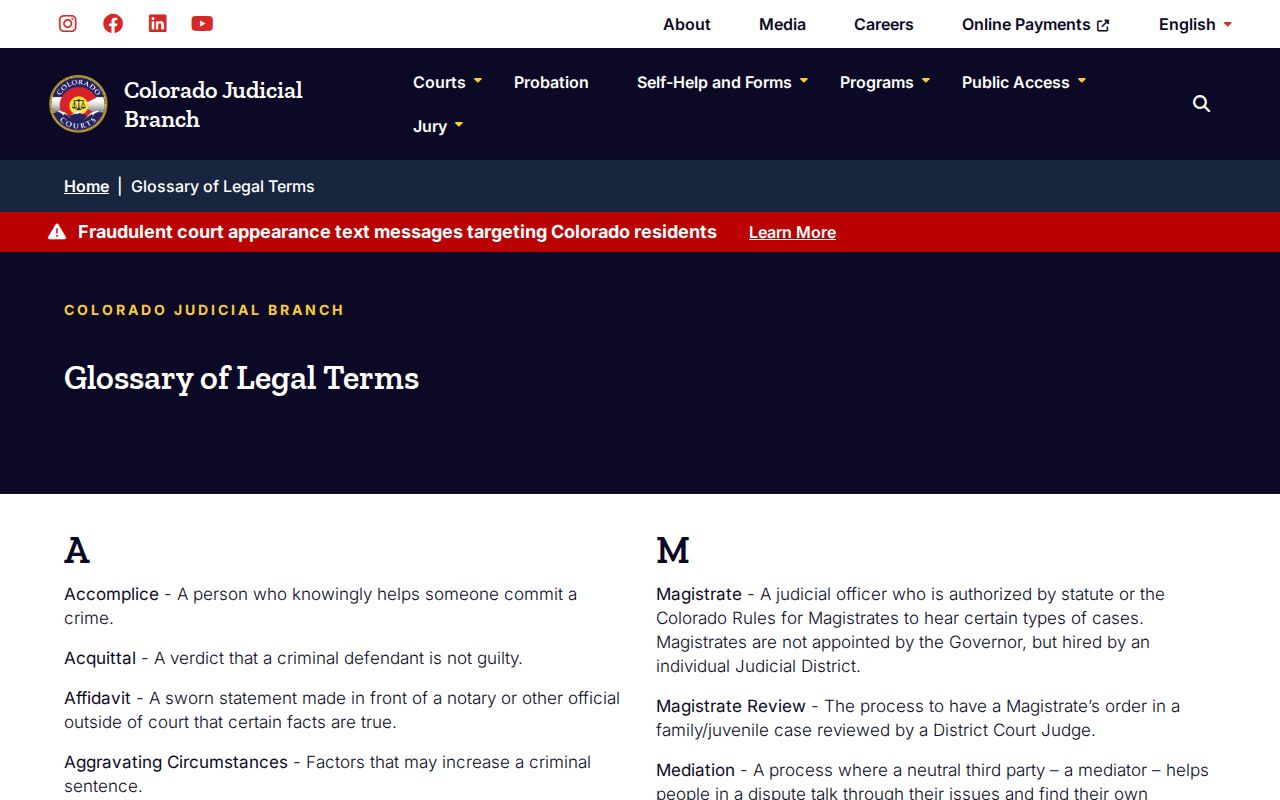
A definition is only the starting point in Conejos County; the issuing court still holds the live status.
Conejos County Bench Warrant Docket Check
Conejos County publishes no public bench warrant list. The nearest self-service tool is the Colorado Judicial Branch Dockets search. Filter by county, courthouse, court type, division, date range, case number, party, or attorney. None of that promises a live warrant result. Pull your own case by case number first, and fall back to name and date filters only if you must.
- Select Conejos County and the fitting court type.
- Enter the full case number or your own party name.
- Review the court, case class, event, and hearing entries.
- Call the Conejos Combined Court clerk to confirm current status.
Inspect the official docket filters.
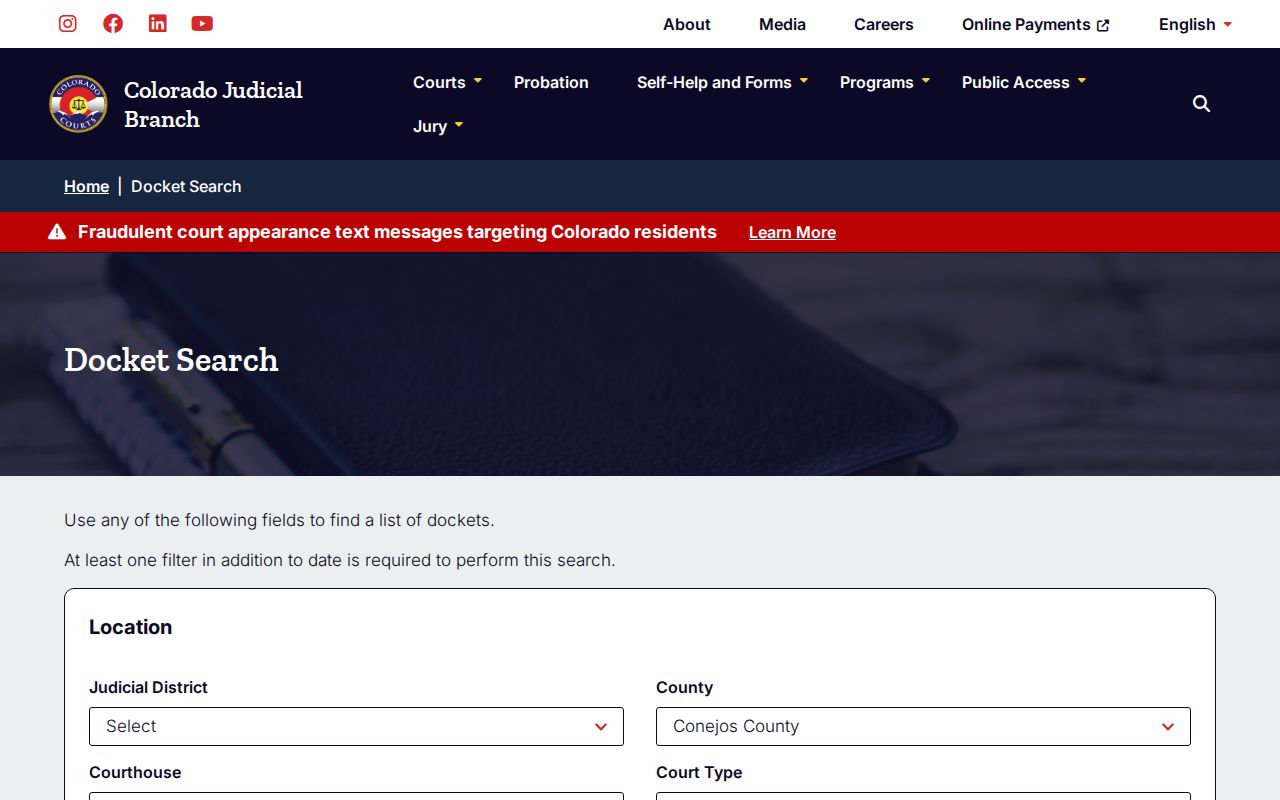
A missing row in Conejos County can mean a town case, sealed file, fresh entry, juvenile limit, or a narrow date range.
How Conejos County Bench Warrants Are Issued
Every bench warrant starts with a duty in an open case. The order might be to appear, pay, report, or finish some condition. Miss it, and the judge decides whether a warrant issues and what bond or next step applies. The clerk records the order. Law enforcement then gains the power to arrest under it. No website or payment vendor creates that penalty on its own. The combined-court label matters in Conejos County. Conejos Combined Court handles both District Court and County Court business under one roof, though the case level and the judge’s authority still differ. Town courts keep their own ordinance and municipal-traffic files. Probation matters may run through yet another branch.
Process line: missed duty → judge reviews the case → bench warrant issues → warrant is served or recalled → the case resumes.
Note: Watching a court livestream is not the same as making a required appearance.
Conejos County Bench Warrant Appearance Risks
The official virtual-courtroom notice is blunt: watching a stream is not appearing. Conejos County’s court page adds that virtual appearance takes a motion under CJD 23-03. Never assume a link, stream, email, or informal call replaced your in-person duty. Confirm the approved format with the clerk first. The Judicial Branch notice spells out the warning.
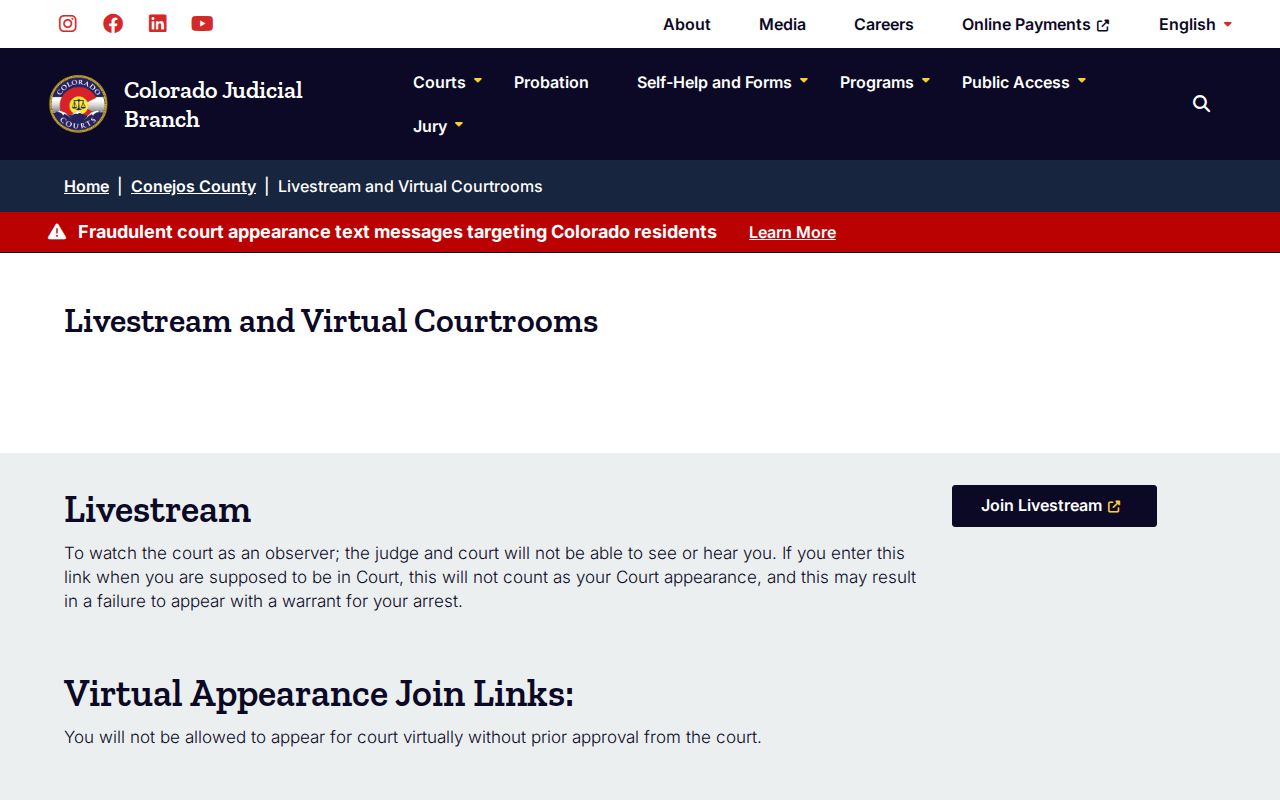
That notice ties one small mix-up, counting view access as attendance, to a real failure-to-appear risk in Conejos County.
Caution: Get express court approval for a remote appearance; a livestream link does not satisfy a duty to appear.
Bench Warrants and Arrest Warrants Compared
Both orders can put an arrest in motion. They just begin for different reasons. A Conejos County bench warrant usually follows a missed duty inside an existing case. An arrest warrant rests on a judge’s probable-cause finding tied to an alleged offense. A summons, by contrast, just directs a person to appear. The court record, not a remembered label, tells you which one exists.
| Feature | Bench warrant | Arrest warrant |
|---|---|---|
| Usual trigger | Missed appearance or court order | Probable cause of an offense |
| Case posture | Existing court duty | Charging or arrest process |
| Who controls recall | Issuing judge or court | Issuing judge or court |
| Next step | Confirm, then ask about appearance, recall, or bond | Confirm, then plan surrender, counsel, and bond |
A sheriff may serve either order. Service does not hand the Sheriff’s Office every judge’s case file, though. For that process, see the Conejos County arrest warrant search.
Conejos County Bench Warrant Record Requests
When a docket index falls short, the official court record request form is the next move. It wants your contact details, the court location, case information, and the documents you seek. There is no “warrant status” box. A tight request can still ask for the register of actions, the warrant order, the disposition, or other own-case papers, within lawful limits. Sealed, juvenile, suppressed, or protected material may demand ID or stay closed. The Colorado Criminal Justice Records Act governs sheriff and police records. Judicial Branch access policy governs court records. Send one request to the wrong office and you may get “no record” while the question sits unanswered. The blank Judicial Branch request form shows every field you will fill in.
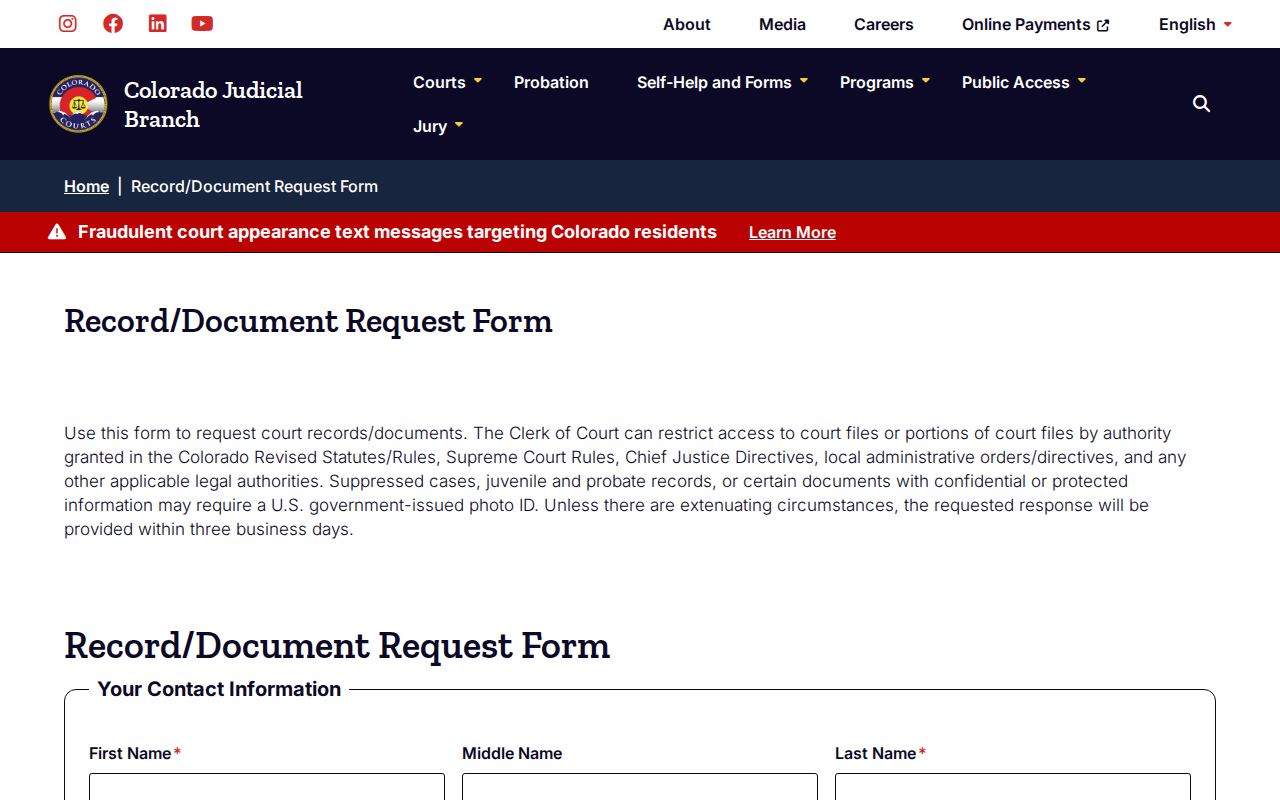
The form lets a Conejos County requester ask precisely, without posting private identity data on a public page.
Resolving a Conejos County Bench Warrant
Only the issuing court can recall a Conejos County bench warrant. Paying a vendor changes nothing by itself. Nor does a sheriff call, or a name vanishing from an online view. Bring the case number and ask the clerk which step fits, whether a motion, an appearance, bond, payment, or counsel. Felony and probation matters carry real risk, so get legal advice before any in-person surrender.
- Confirm the court, case number, and live bench warrant status.
- Ask whether the judge requires a motion, set appearance, bond, or personal surrender.
- Follow the issuing court’s exact filing and payment directions.
- Keep the signed order, receipt, and next court date.
- Ask whether the warrant record and law-enforcement system were updated.
The Colorado bond page lists cash, personal recognizance, professional surety, and property bonds. A judge selects the type and amount. JDF 370 is the Judicial Branch appearance-bond form used to cancel a warrant or secure release in the proper setting.
View the official bond-types source.
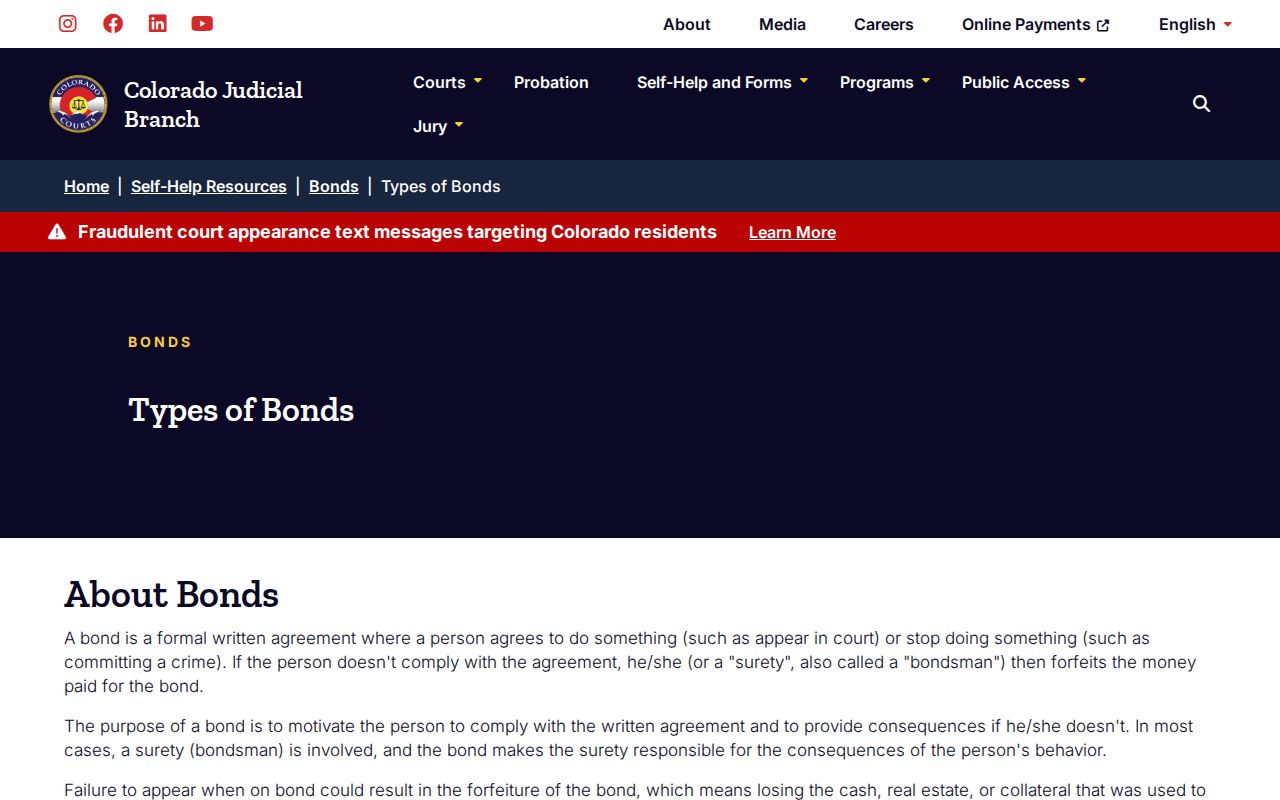
Those four Conejos County bond categories are a framework, not a promise that any specific bond will be offered.
Conejos County Bench Warrant Payment Limits
Payments for Conejos County cases run through online, phone, mail, and in-person routes on the 12th Judicial District collections page. Check, cash, money order, Visa, MasterCard, and Discover all work. Payment plans may carry a $25 annual processing fee. None of that clears a bench warrant by itself. A judge may still require an appearance or a court order after the money lands, and the official collections page spells out each route and the fee terms.
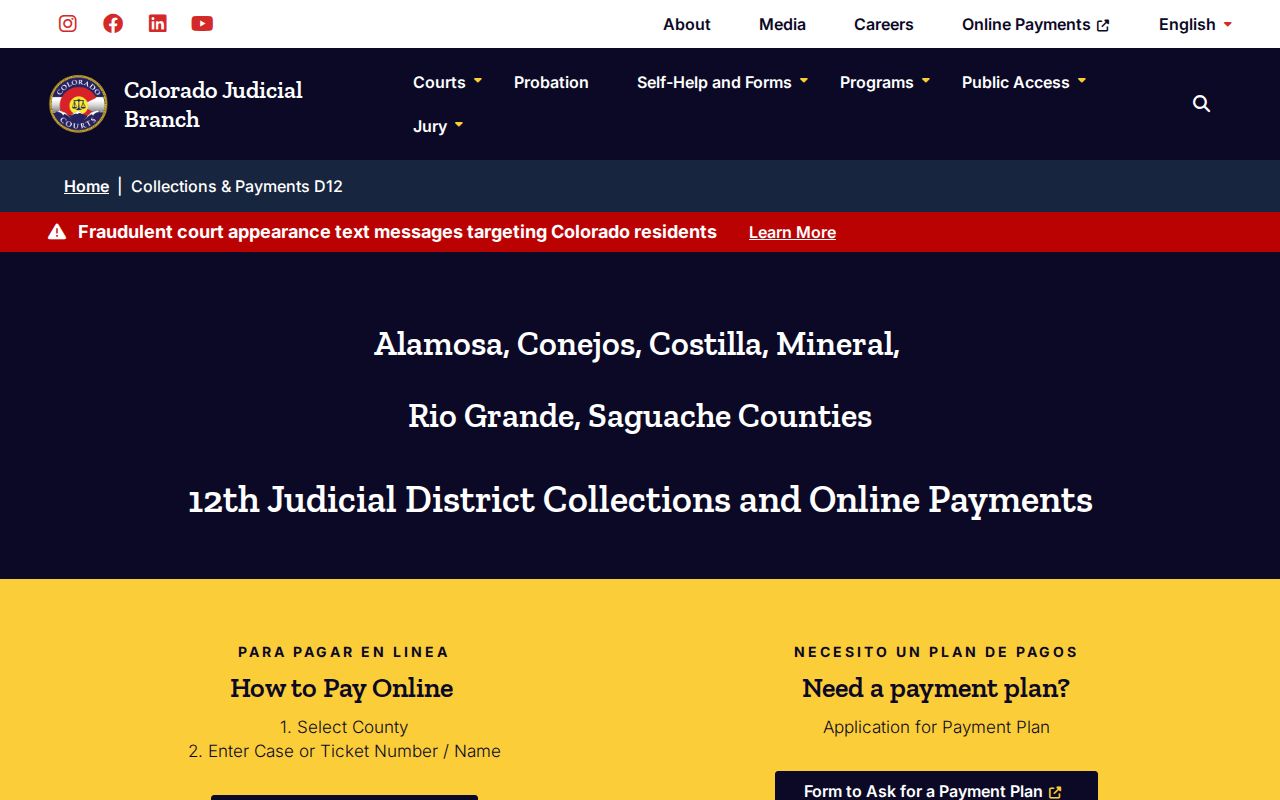
Payment alone never settles a Conejos County bench warrant; confirming current status with the court is the step that actually connects money to recall.
- Recall
- The judge withdraws the warrant.
- Quash
- The court nullifies the warrant order.
- Bond forfeiture
- Money, property, or collateral may be lost after a failure to appear.
- FTA
- Failure to appear for a required court setting.
Finding the Court That Issued the Warrant
Which court issued your Conejos County bench warrant shapes everything. For a state felony, misdemeanor, petty-offense, or state traffic case, go to the Conejos Combined Court Clerk of Court. The clerk answers at 719-376-5465. Email works too: ConejosClerk@judicial.state.co.us. The temporary customer-service counter sits at S.P.M.D.T.U. Concilio Superior, 603 Main Street, Antonito. Hours are 8:00 a.m. to 4:00 p.m. on weekdays, excluding state holidays. Trials may be set elsewhere, so check the summons or notice before you travel. For an ordinance or municipal-traffic case, contact the court named on the citation. La Jara, Manassa, and Sanford each publish town-court navigation, but no shared municipal warrant database ties them together. Conejos County probation lists 719-376-6785. For law-enforcement records or custody routing, the Sheriff's Office lists 719-376-2196 and the jail lists 719-376-6778. Routing matters here. A court order, a sheriff service record, and a probation file live with different offices. A "no record" reply from one settles nothing about another. Give the case number, name the document you want, and ask whether the request belongs with the court clerk, sheriff, probation office, or municipal clerk. That simple step keeps a Conejos County warrant inquiry pointed at the office that can confirm its present status.
Conejos Combined Court
District and county case records
719-376-5465
Conejos Sheriff
Service, custody, and record routing
719-376-2196
Conejos Warrant Clearance Events
The 12th Judicial District has used event-based warrant resolution, but it has not announced a standing Conejos County amnesty. An official 2025 release described a Warrant Clearance Day at the Alamosa County Justice Center. Eligible categories were limited, and the event had set times, a call deadline, and specific options. That past event shows a district process, not a current open door.
Read the dated clearance-day announcement.
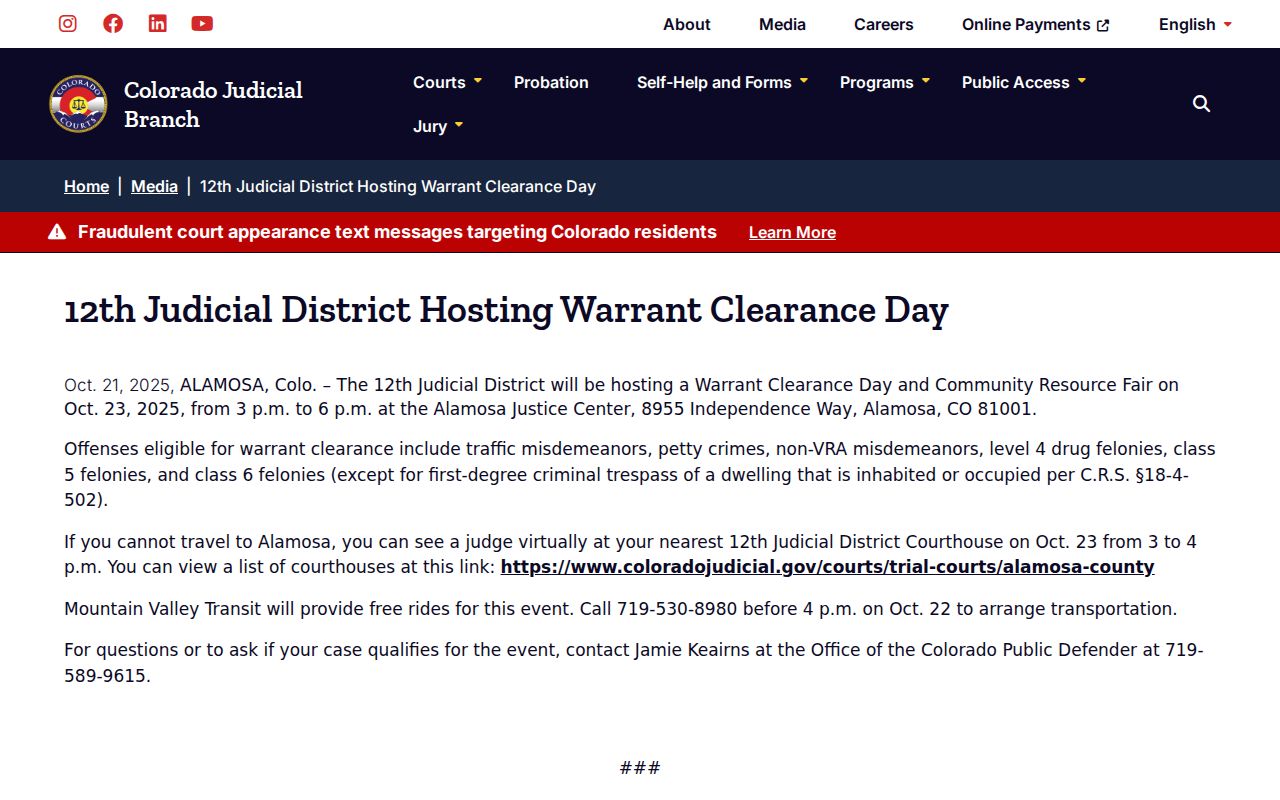
One event is not the whole calendar. A court listing also showed an October 1, 2026 Legal Resource Day in Alamosa. It referenced a warrant-clearance flyer too. The detailed terms were not posted. Call the clerk before relying on any Conejos County event, and watch the Judicial Branch press-release index for current announcements.
A current official notice must still supply the time, eligibility rules, attendance terms, and Conejos County participation details.